
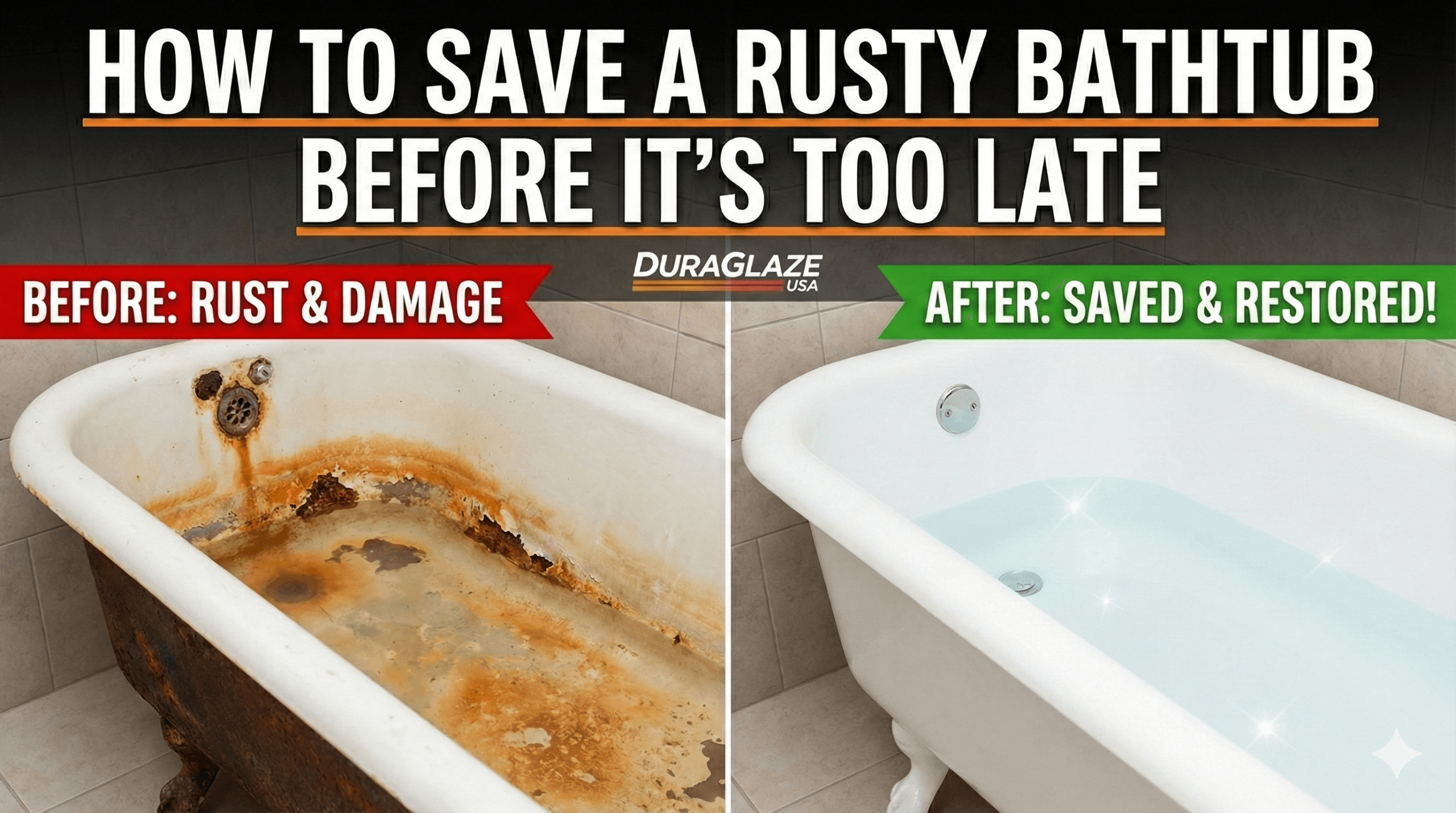
Rust is the cancer of the bathroom. It usually starts small—a faint orange ring around your drain or a jagged spot near the overflow plate. You might ignore it for a month, but then a chunk of enamel flakes off, and suddenly you have a sharp, ugly sore in your tub.
Searching for “rusty bathtub” usually means you are worried about two things:
-
Tetanus/Safety: Is it safe to bathe in?
-
Leaks: Is this going to leak and damage my home or eat through to my downstairs neighbor’s ceiling?
The good news? Unless you can poke a screwdriver through the metal, your tub is likely salvageable. Here is how to fix it properly.
Why Do Bathtubs Rust?
Most metal bathtubs are made of cast iron or stamped steel coated in porcelain. Rust happens when that porcelain barrier is breached.
-
Chip Damage: A dropped shampoo bottle chips the enamel, exposing the raw iron to water and oxygen.
-
Water Pooling: If a tub wasn’t installed perfectly level, water sits in one corner, slowly eroding the glaze.
-
The Overflow Danger Zone: The area around the silver overflow plate (the high drain) is notorious for rusting because water gets trapped behind the metal plate, eating the tub from the outside in.
The “Band-Aid” Fix vs. The Cure
Why DIY Paint Kits Fail
You can buy “appliance epoxy” or rust-oleum at the hardware store. While these might cover the orange color for a few weeks, they rarely stop the chemical reaction of oxidation. Rust is moisture-wicking; if you paint over it without properly neutralizing it, it continues to spread underneath the paint. Eventually, it bubbles up and flakes off, often larger than before.
The Professional Repair Process
A professional refinisher treats rust like an auto body shop treats a classic car.
-
Grind and Remove: The technician uses power tools to grind away all loose rust and damaged enamel down to the bare, shiny metal.
-
Chemical Neutralization: A rust inhibitor is applied to chemically convert any remaining microscopic iron oxide into a stable compound. This stops the “cancer” from spreading.
-
Reinforcement: If the rust was deep, the technician fills the divot with a waterproof polyester filler (similar to Bondo but designed for water immersion).
-
Resurfacing: Finally, the entire tub is sprayed with a new high-gloss coating. This encapsulates the repair, making it invisible and watertight.
When Is a Tub Too Rusty to Save?
There is a limit. If the rust has eaten completely through the iron (i.e., there is a hole), simple refinishing isn’t enough.
-
Small Holes: Can sometimes be patched with a fiberglass mesh inlay before glazing.
-
Structural Crumbling: If the area around the drain crumbles when touched, the structural integrity is gone. In this case, you may need a tub cut-out or replacement.
However, 90% of rust issues are surface-level and can be permanently fixed.
Don’t Let Rust Ruin Your Bathroom
A rusty tub makes your whole bathroom look unsanitary, no matter how clean the rest of the room is. More importantly, it is a ticking time bomb for leaks.
Refinishing your rusty tub seals the metal, stops the corrosion, and gives you a smooth, white surface that looks factory-new. It is the fastest, most cost-effective way to protect your investment.
Stop the rust today.