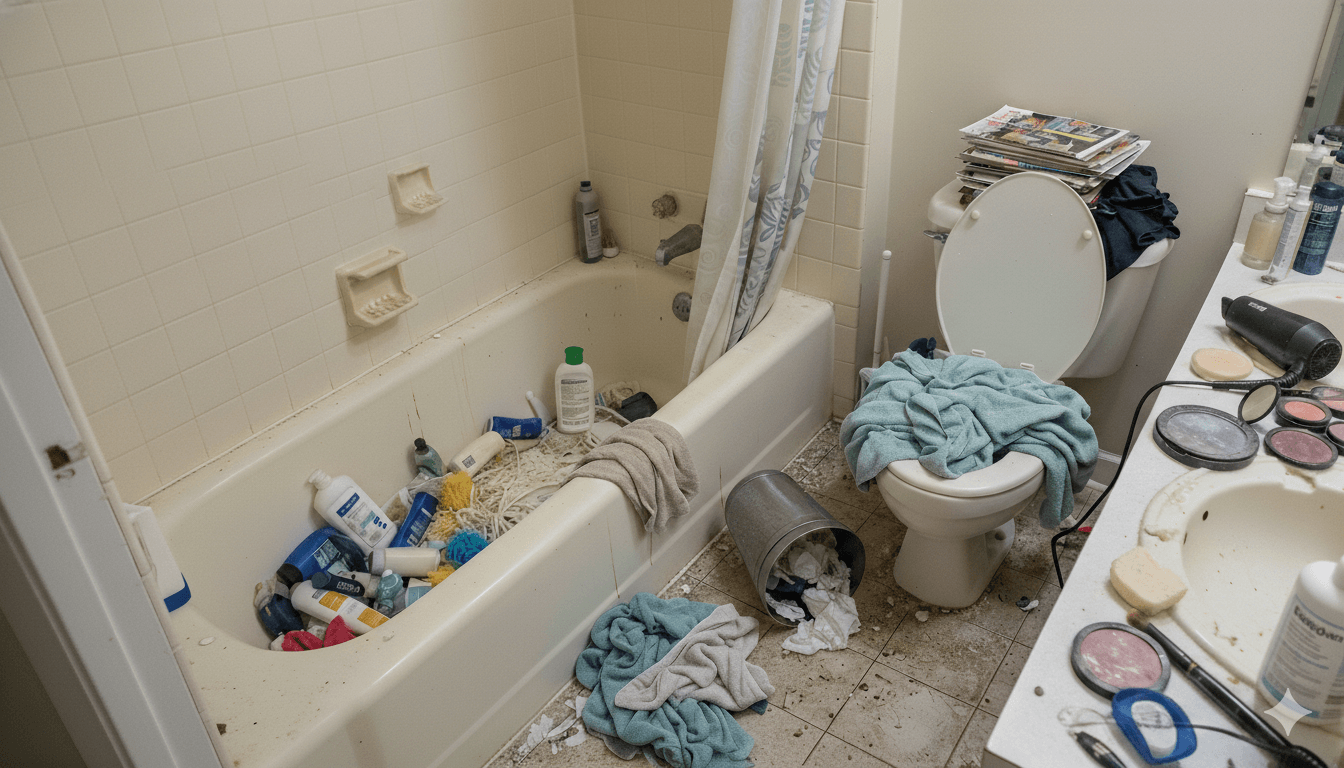

You have tried bleach. You have tried baking soda and vinegar. You have maybe even tried harsh industrial acid cleaners. Yet, no matter how hard you scrub, those gray, dingy patches on the bottom of your bathtub remain.
If you are frustrated, you are asking the wrong question. The question isn’t “Which cleaner should I use?” The real question is “Why is my bathtub absorbing dirt?”
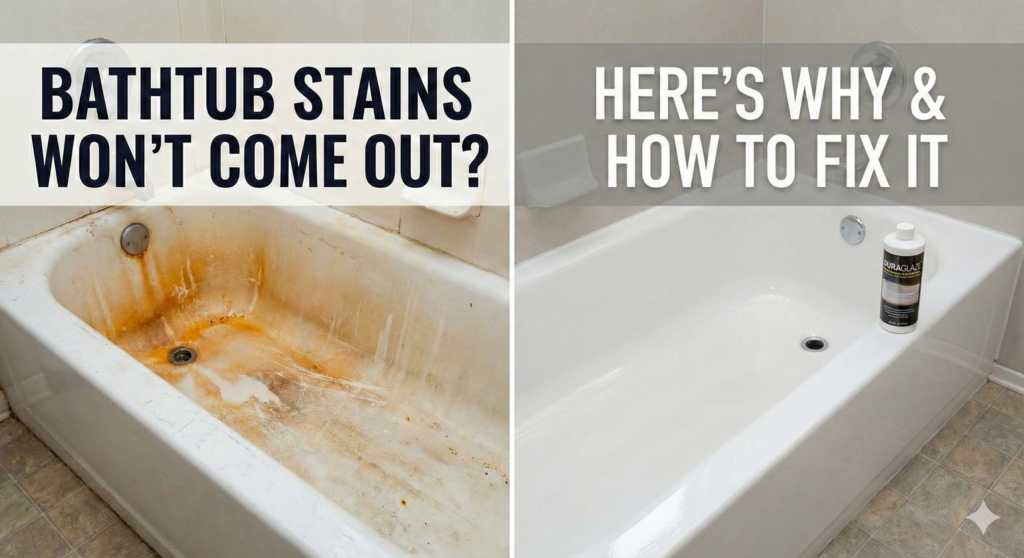
When bathtub stains won’t come out, it is rarely because you aren’t cleaning hard enough. It is almost always because the surface of your tub has failed. Here is the science behind why your tub looks dirty—and the only way to permanently fix it without replacing it.
The Science of the “Permastain”: Porosity
Bathtubs—whether cast iron, steel, or fiberglass—start their lives with a hard, non-porous protective coating. On cast iron tubs, this is a fired porcelain glaze. on fiberglass, it is a gel coat. This layer is like a sheet of glass; dirt sits on top of it and rinses away easily.
However, over decades of use and abrasive cleaning (using scouring pads or gritty powders), that glass-like layer wears down.
1. The Sponge Effect
As the glaze thins, the material underneath becomes porous. Imagine your bathtub surface transforming from a sheet of glass into a microscopic sponge. When you take a bath or shower, oils, soap scum, minerals from hard water, and dirt are trapped inside these microscopic pores.
2. Why Bleach Doesn’t Work
When you apply bleach to a porous tub, it might temporarily whiten the surface by chemically burning out the organic matter. However, the pores remain open. In fact, bleach is corrosive and can eat away the remaining enamel, making the pores even larger. The stains return faster and darker every time you clean.
The Danger of Over-Scrubbing
Many homeowners make the mistake of using “magic” erasers or heavy-duty scouring pads. While these remove the immediate stain, they act like sandpaper. You are literally sanding away the last remaining bits of your protective coating.
-
Result: The tub feels rough to the touch (like chalkboard or 600-grit sandpaper).
-
Outcome: The rougher the surface, the harder it is to clean, creating a vicious cycle of scrubbing and staining.
The Solution: You Need a New Surface (Not a New Tub)
If the “glass” layer is gone, you have two options: replace the tub or create a new surface.
Option A: Replacement (The Expensive Route)
Replacing a bathtub is rarely just about buying a $400 tub. You have to account for:
-
Demolition: Breaking up the old cast iron or cutting fiberglass.
-
Plumbing: Moving drains and overflow pipes.
-
Tile Work: The bottom rows of tile are almost always destroyed during removal.
-
Cost: Average cost ranges from $3,000 to $6,000+.
Option B: Professional Refinishing (The Smart Route)
Refinishing (also called reglazing or resurfacing) is the process of applying a new, incredibly durable, non-porous coating over your existing tub.
How It Works:
-
Acid Etching: A professional uses an acid based solution to wash to clean out the deep pores and create a bondable surface.
-
Repair: Any deep scratches or chips are repaired and sanded flush.
-
Primer & Topcoat: An industrial-grade bonding agent is applied, followed by multiple layers of acrylic urethane.
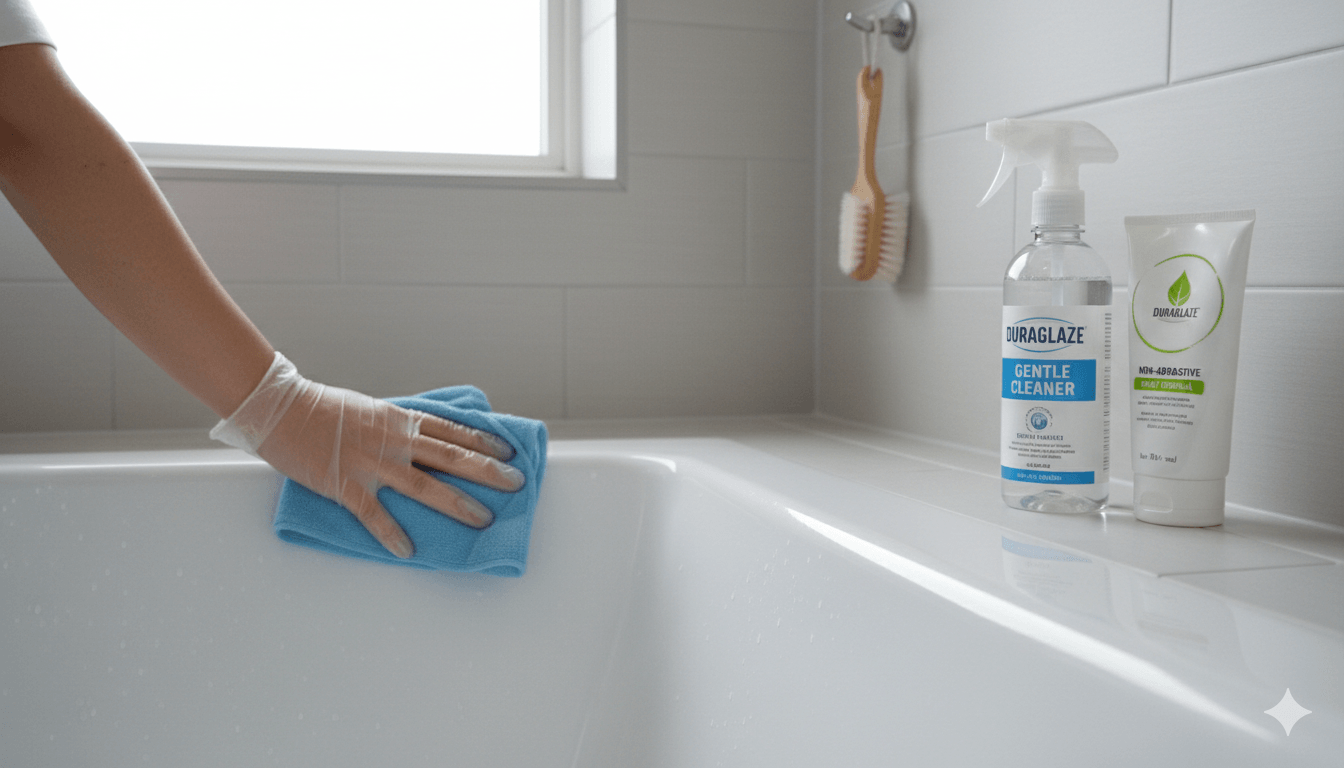
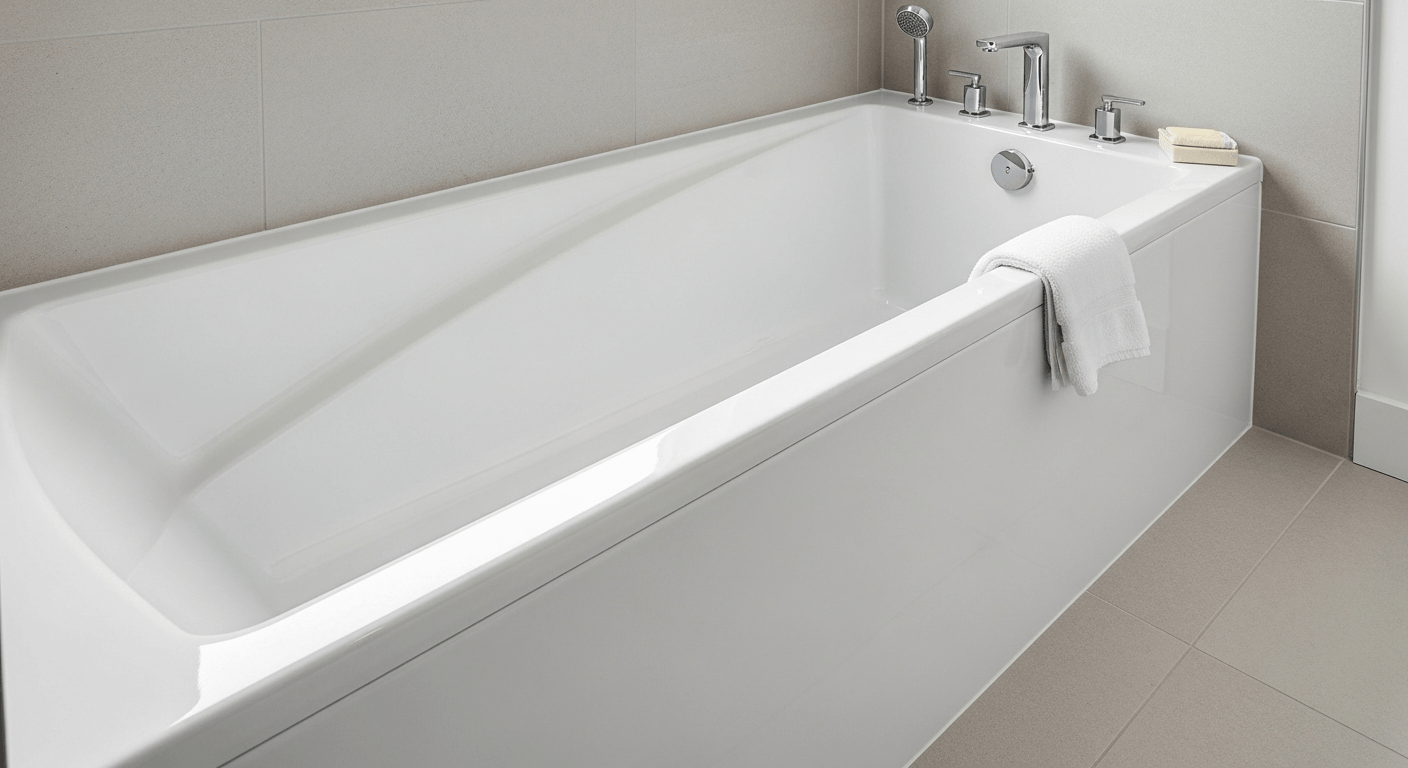
The result is a surface that looks and feels like new. It is chemically sealed, meaning dirt sits on top again. You can switch to a gentle eco-friendly cleaner and wipe your tub clean in seconds.
Stop Scrubbing, Start Enjoying
If your bathtub stains won’t come out, stop wasting money on “miracle” cleaners. The surface is dead, but the tub can be saved. A professional refinishing job takes less than a day, costs a fraction of replacement, and gives you a brilliant white, easy-to-clean tub for another 10–15 years or more.
Ready to ditch the scrub brush?